
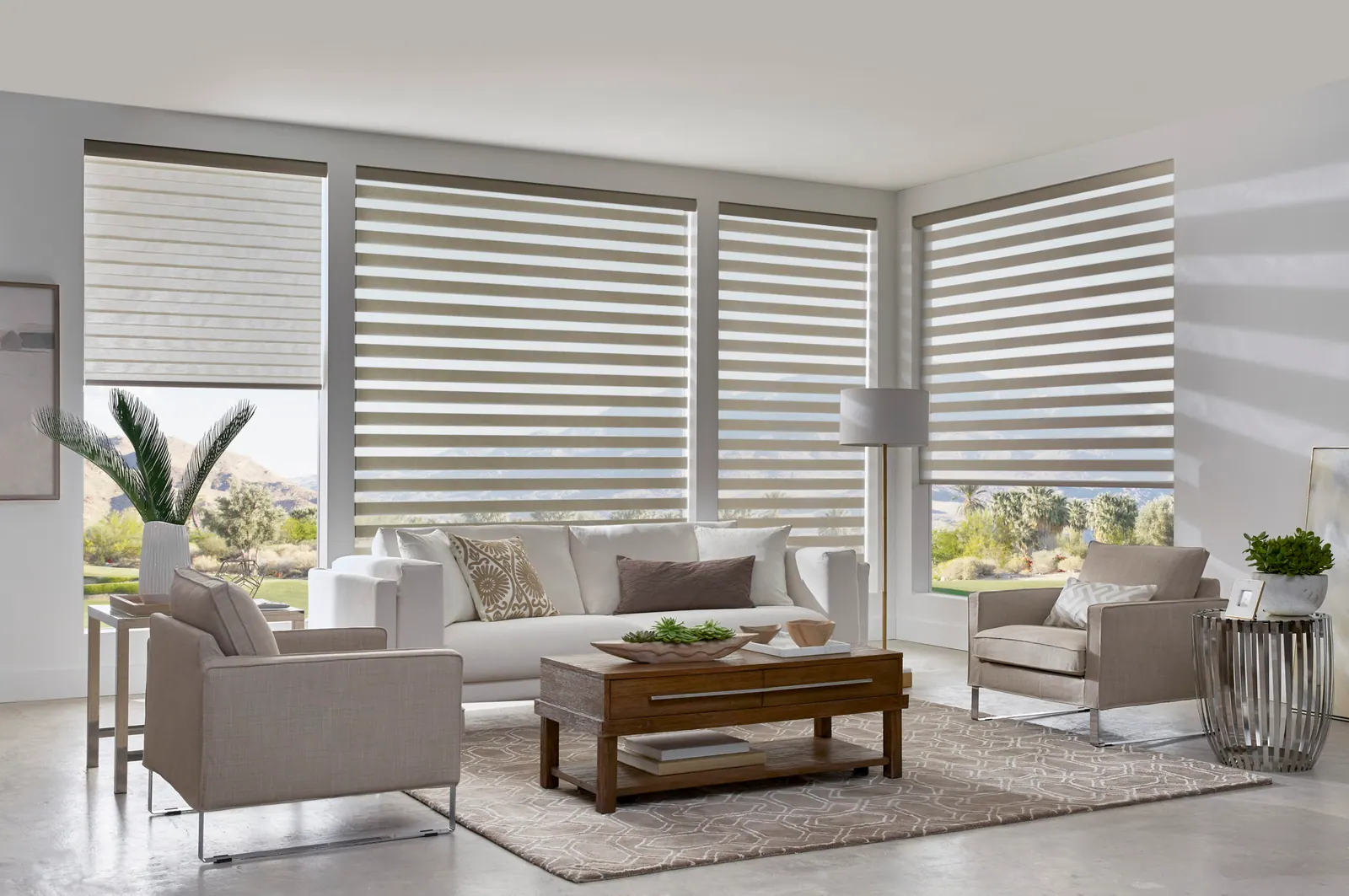
Very wide openings, used constantly
The signature detail here is the sliding or pocketing wall, frequently twelve feet wide and sometimes a great deal more. It is the best thing about the house and the hardest thing to treat.
Beyond a certain width a single shade is a problem: the fabric can distort, the roll gets heavy, and nobody enjoys operating it. We either split the opening across a shared headrail so it operates as a pair but reads as one clean line, or move to a vertical product that stacks to one side and clears the opening entirely.
Which one depends on how the opening is used. If the wall pockets fully and the room genuinely becomes the lanai, a treatment that stacks right out of the way is worth more than one that looks tidier when closed.
Motorisation is close to essential
Two reasons, and they compound. The treatments are large, so operating them by hand is a chore rather than a moment. And the openings are used many times a day, so that chore repeats.
Motorised shades solve both, and they add something that matters here specifically: every shade in a run lands at exactly the same height. On a wall of glass that consistency is the difference between looking designed and looking approximate.
Scheduling is worth setting up properly. West-facing Kohala glass takes serious afternoon sun, and a shade that closes ahead of the heat rather than after someone notices the room is uncomfortable does real work on the air conditioning.
Second homes and long absences
A good share of Mauna Lani property is used part of the year. That changes what a window treatment is for: while you are away it is protecting the interior, not managing your comfort.
Scheduled shades handle that without anyone present. Combined with window film as a permanent baseline, an unoccupied house keeps its floors and furnishings out of direct sun for months at a time.
It is also worth choosing materials that tolerate being shut up in humidity for weeks. Synthetic fabrics and composite hardware do; natural fibres and untreated wood are less forgiving of a closed house in a coastal climate.
Where we work in Mauna Lani
Neighborhoods
Mauna Lani Resort · Kaimana · Champion Ridge · Fairways North · Pauoa Beach · Kalahuipuaa
ZIP codes served
96743
What we install in Mauna Lani
Mauna Lani questions
- Do you charge extra to come out to Mauna Lani?
- No. Mauna Lani is inside our regular service area and the in-home consultation is free. We batch appointments by area so our team works a full day in one place, which is how we avoid a travel charge on an island where everything is a drive.
- How long does an installation in Mauna Lani take?
- Most whole-home installations are done in a single day. Large openings and specialty shutters can run into a second visit, and we tell you which applies before you order rather than on the day.
- What is the lead time?
- Typically three to five weeks for blinds and shades, and five to seven for custom shutters. Everything is made on the mainland and shipped over, so island lead times run a little longer than a mainland quote would suggest. You get a real date at the point of order.
- What works on a very wide pocketing lanai door?
- Either a pair of shades on a shared headrail, which operates together but reads as one line, or a vertical treatment that stacks fully to one side. If the wall pockets completely and the room becomes the lanai, the stacking option is usually worth more, because clearing the opening matters more than how it looks closed.