
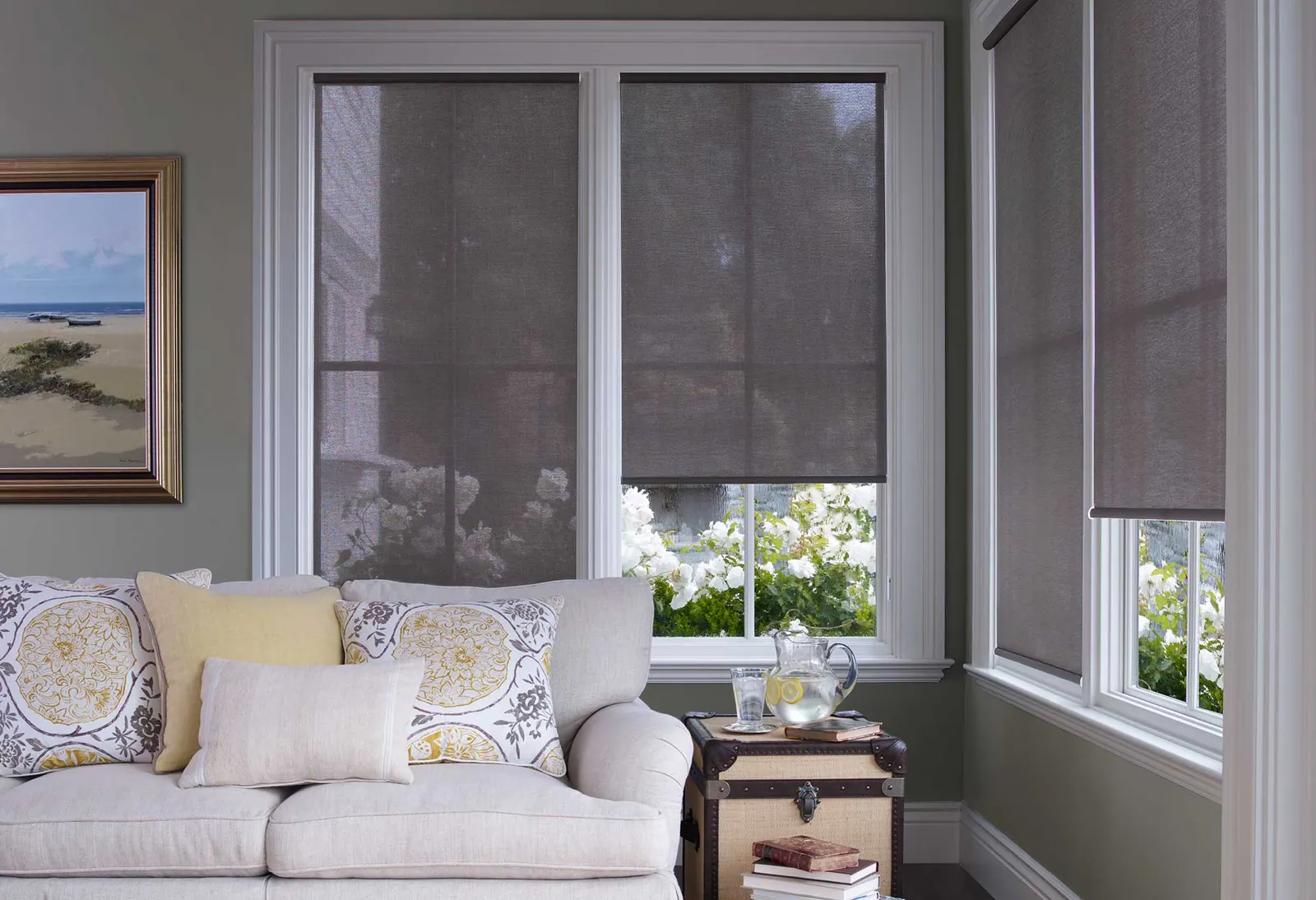
The resort side: heat and glare with no shade
Down on the coast there is essentially no vegetation to break the light. Homes and condos sit on open lava, and the sun arrives unfiltered from mid-morning until it drops into the ocean.
This is the most sun-punished environment we work in. It is where we specify the tightest solar screens, 1% or 3% openness rather than the 5% we might use elsewhere, and where we push hardest for window film as a permanent layer that works whether or not anyone is home to operate a shade.
The other factor is that many of these properties are second homes or rentals, unoccupied for stretches. A treatment that needs someone to remember to close it is not much use. Scheduled motorisation matters more here than almost anywhere: shades that close themselves through the hottest part of the day protect the interior and cut the cooling load whether the house is occupied or not.
The Village: wind is the constraint
Waikoloa Village sits high enough to catch the trades properly, and it is consistently, genuinely windy. Anyone who lives there knows it.
That changes the specification in ways people do not anticipate. A blind at an open window rattles constantly, which is merely annoying until it is the bedroom window. A properly weighted bottom rail helps; hold-down brackets fixed to the sill solve it outright, and we fit them as standard on anything in the Village that gets opened.
Wind also rules out lightweight fabrics on any opening that gets used. A light roller shade in a trade wind flutters, bows away from the glass and eventually distorts. We specify heavier fabrics up there, and for lanai openings we usually recommend a product that can be secured at the bottom rather than one that hangs free.
Vog, dust and cleaning
Depending on the wind, Waikoloa gets both fine volcanic haze and a lot of dry dust off the lava fields. Both settle on horizontal surfaces, which means slats.
This is a real argument for the material choice rather than a footnote. Aluminum and composite wipe clean with a damp cloth in seconds. Fabric shades and cellular cells hold fine particulate that has to be vacuumed out, and honeycomb cells in particular are difficult to get properly clean once dust is inside them.
For a Waikoloa house we lean toward hard surfaces in the rooms that face the prevailing wind, and keep fabric for the sheltered side. It is not a rule, but it is what we would do in our own house.
Where we work in Waikoloa
Neighborhoods
Waikoloa Village · Waikoloa Beach Resort · Waikoloa Highlands · Puako · Anaehoomalu · Paniolo Greens
ZIP codes served
96738
What we install in Waikoloa
Waikoloa questions
- Do you charge extra to come out to Waikoloa?
- No. Waikoloa is inside our regular service area and the in-home consultation is free. We batch appointments by area so our team works a full day in one place, which is how we avoid a travel charge on an island where everything is a drive.
- How long does an installation in Waikoloa take?
- Most whole-home installations are done in a single day. Large openings and specialty shutters can run into a second visit, and we tell you which applies before you order rather than on the day.
- What is the lead time?
- Typically three to five weeks for blinds and shades, and five to seven for custom shutters. Everything is made on the mainland and shipped over, so island lead times run a little longer than a mainland quote would suggest. You get a real date at the point of order.
- Do you work on vacation rentals and second homes?
- Regularly, and it is a slightly different brief. Durability and low maintenance matter more than in an owner-occupied house, because nobody is there to notice a problem early. We also fit motorised treatments on schedules so the interior is protected while the property is empty.