
Openness factor is the whole decision
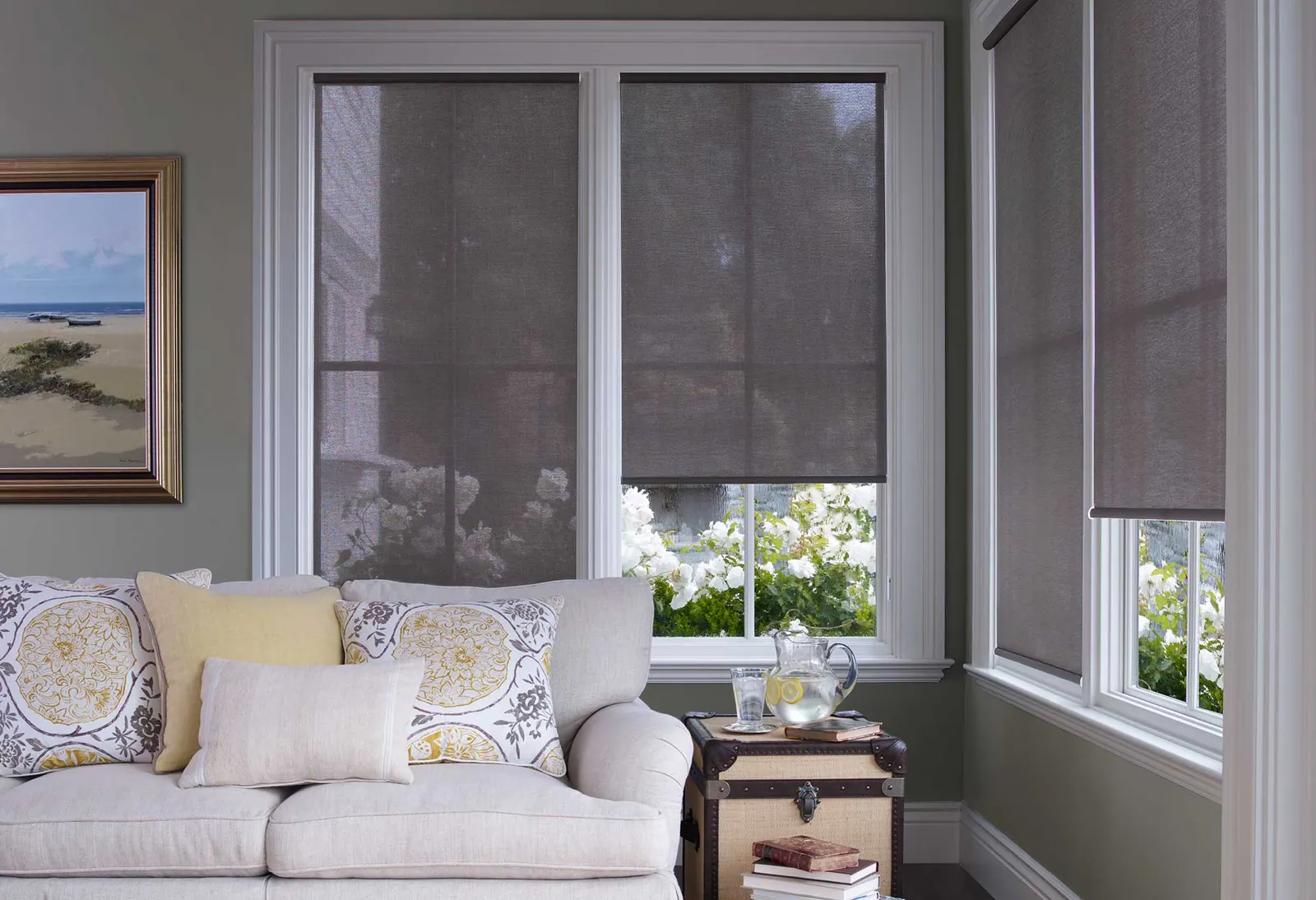
Solar screen mesh is specified by openness, the percentage of the weave that is open space rather than yarn. It is the single number that determines how the shade performs and how it looks.
- 1%: very tight weave. Maximum glare and heat control, minimum view. Suits west-facing windows where the sun is genuinely punishing and the view is secondary.
- 3%, the most-specified option, and a sensible default. Blocks the large majority of glare and UV while leaving a clearly usable view. This is what we put on most Kona and Kohala view windows.
- 5%: a noticeably brighter, more open view with meaningfully less glare control. Good for north and east exposures.
- 10% and 14%: maximum view, modest sun control. These are for windows where the view is everything and the sun is not a real problem.
Darker mesh colours give a better view out and better glare control, because the yarn absorbs light rather than scattering it. Lighter colours reflect more heat but produce more haze in the view. Charcoal and bronze are the two we specify most often; white is popular from the street side and disappointing from the inside.
Interior or exterior mounting
This is a genuine performance difference, not a preference.
An interior solar screen hangs inside the glass. It cuts glare and UV effectively, and it is the easier, cheaper, more common installation. But by the time the sunlight reaches it, it has already passed through the window and become heat inside the room. Interior screens manage glare far better than they manage temperature.
An exterior solar screen mounts outside the glass and stops the solar energy before it enters the building. For heat control specifically, this is dramatically more effective. It is the difference between shading a window and shading a room. On a west-facing great room in Kailua-Kona, an exterior screen can make a several-degree difference on an August afternoon.
The trade-offs on exterior screens are real: they live in salt air and trade winds, they need marine-grade hardware and a track that will not seize, and they cost more. For homes with severe west exposure we still recommend them regularly, because nothing else moves the needle as far on afternoon heat.
The Kailua-Kona case for solar screens
Three local conditions make this product unusually relevant here.
Tropical sun. At this latitude the ultraviolet load is among the highest in the country, and unlike a mainland summer it does not ease off for half the year. Add the glare reflecting off the water on the Kona and Kohala coasts and interiors take a beating. Hardwood floors, rugs, artwork and leather fade faster here than owners expect. A 3% screen blocking most of the UV is straightforwardly cheaper than refinishing a floor.
Sun days. More than 300 a year. There is no cloudy season to give your interiors a rest.
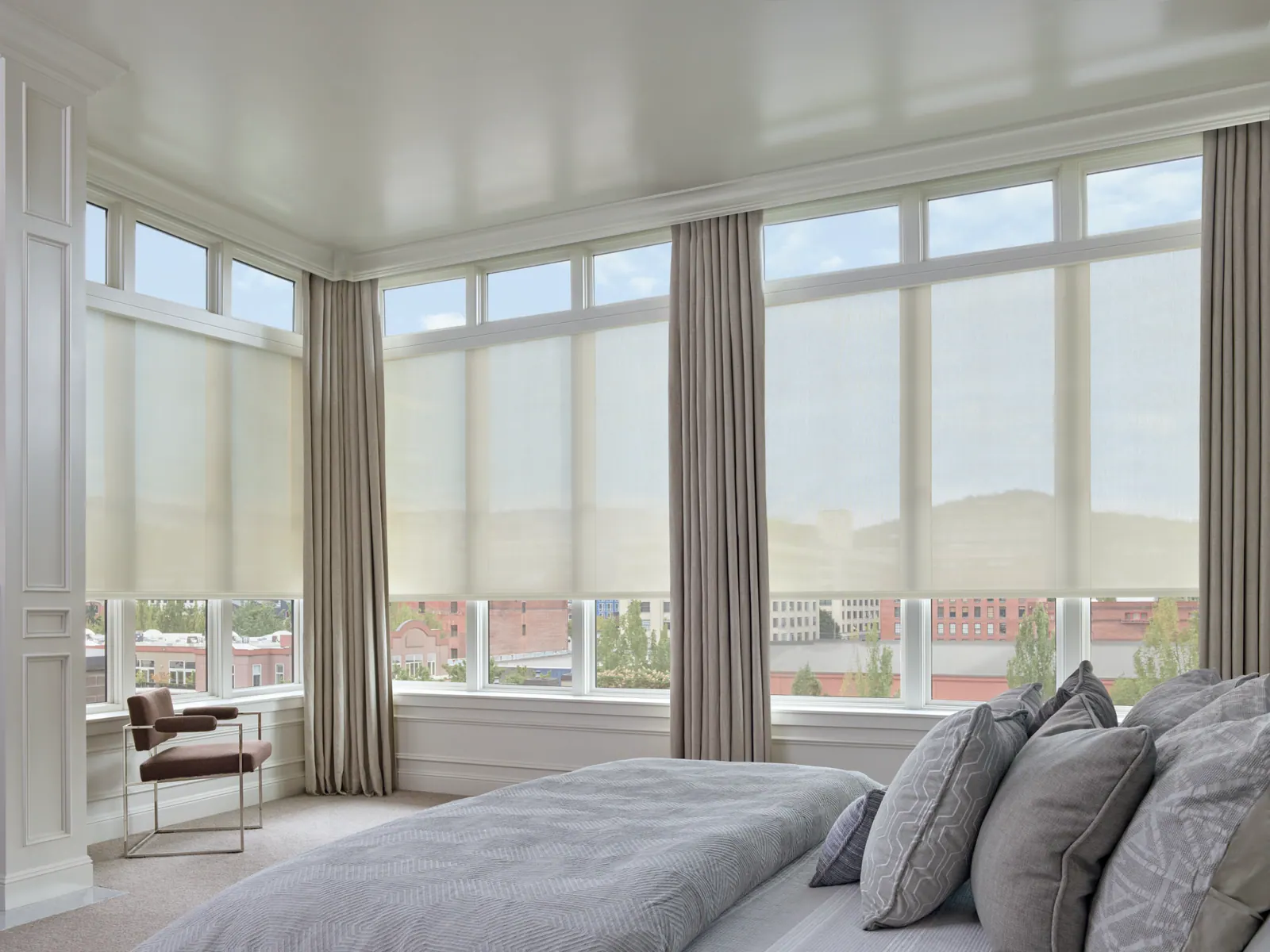
Views worth keeping. Almost every house here was sited for a view: the ocean, the Kohala coastline, Hualalai or Mauna Kea behind you. Any product that blocks that view to solve the sun problem is solving one problem by creating another. Solar screens are the answer that does not make you choose.
What solar screens do not do
It is worth being clear about the limits, because this product is easy to oversell.
They do not give night-time privacy. During the day, when it is brighter outside than in, a solar screen reads as opaque from outside and transparent from inside. After dark with your lights on, that reverses completely, people outside can see in. If the window needs evening privacy, pair the screen with a second treatment, or use dual shades instead.
They do not insulate. The weave is open by design; there is no trapped air. For winter heat retention you want honeycomb shades.
They do not darken a room. Even a 1% screen passes light. They are not a bedroom product.
The most common configuration we install on a serious view window is a solar screen for daytime and a blackout roller on a second bracket for night: two shades, one window, each doing the job it is good at.
Common questions
- What are solar screens for windows?
- They are roller shades made from an open-weave mesh rather than a solid fabric. The weave blocks a defined percentage of incoming sunlight (cutting glare, heat and ultraviolet) while remaining transparent enough to see through. They are sometimes called sun screens, solar shades or screen shades. More at [What Are Solar Screens for Windows?](/what-are-solar-screens-for-window/)
- Can you see through solar screens from outside?
- During daylight, largely not, the brighter side reads as reflective, so from outside you mostly see the mesh. At night with interior lights on, the relationship reverses and you can see in clearly. This catches people out, so plan for it on any ground-floor or street-facing window.
- Do solar screens reduce air conditioning costs?
- Exterior-mounted screens do so significantly, because they stop solar energy before it enters the building. Interior screens help with glare and UV but much less with temperature, since the heat is already inside by the time the light hits them. If cooling cost is the primary goal on a west-facing window, mount outside.
- How long do solar screens last?
- The mesh is engineered for sun exposure, so it holds up better than most fabrics, ten to fifteen years for interior screens is typical. Exterior screens live a harder life and their lifespan depends heavily on exposure and whether they retract when not in use. Salt corrosion on the hardware, not the mesh itself, is what usually ends an exterior installation here.
- Which openness factor should I choose?
- 3% suits most Kona and Kohala view windows and is where we start the conversation. Drop to 1% if the window faces due west and the glare is genuinely painful; move up to 5% or 10% on north and east windows where you want the view more than the protection. We bring samples so you can hold them up to your own window and look through them at your own view.